Why Maps Matter for Everyday Travel
A good map does more than show roads. It helps you understand distance, direction, landmarks, road types, traffic patterns and the best way to move from one place to another. Digital maps combine location data with real-time information, making them useful for daily commutes, errands, business travel, deliveries and vacation planning.
When used well, maps give you a complete view of the journey before you start. You can compare highways with local roads, check alternate routes, estimate travel time and identify important stops such as gas stations, rest areas, parking areas, hotels and restaurants.
Modern online maps are especially useful because they connect geographic information with search intent. A driver may need the fastest route to work, a traveler may need a scenic route across several cities, and a local customer may need directions to a store entrance or parking lot. Each situation depends on clear map data, accurate addresses and directions that match real road conditions.
How Driving Directions Help You Choose Better Routes
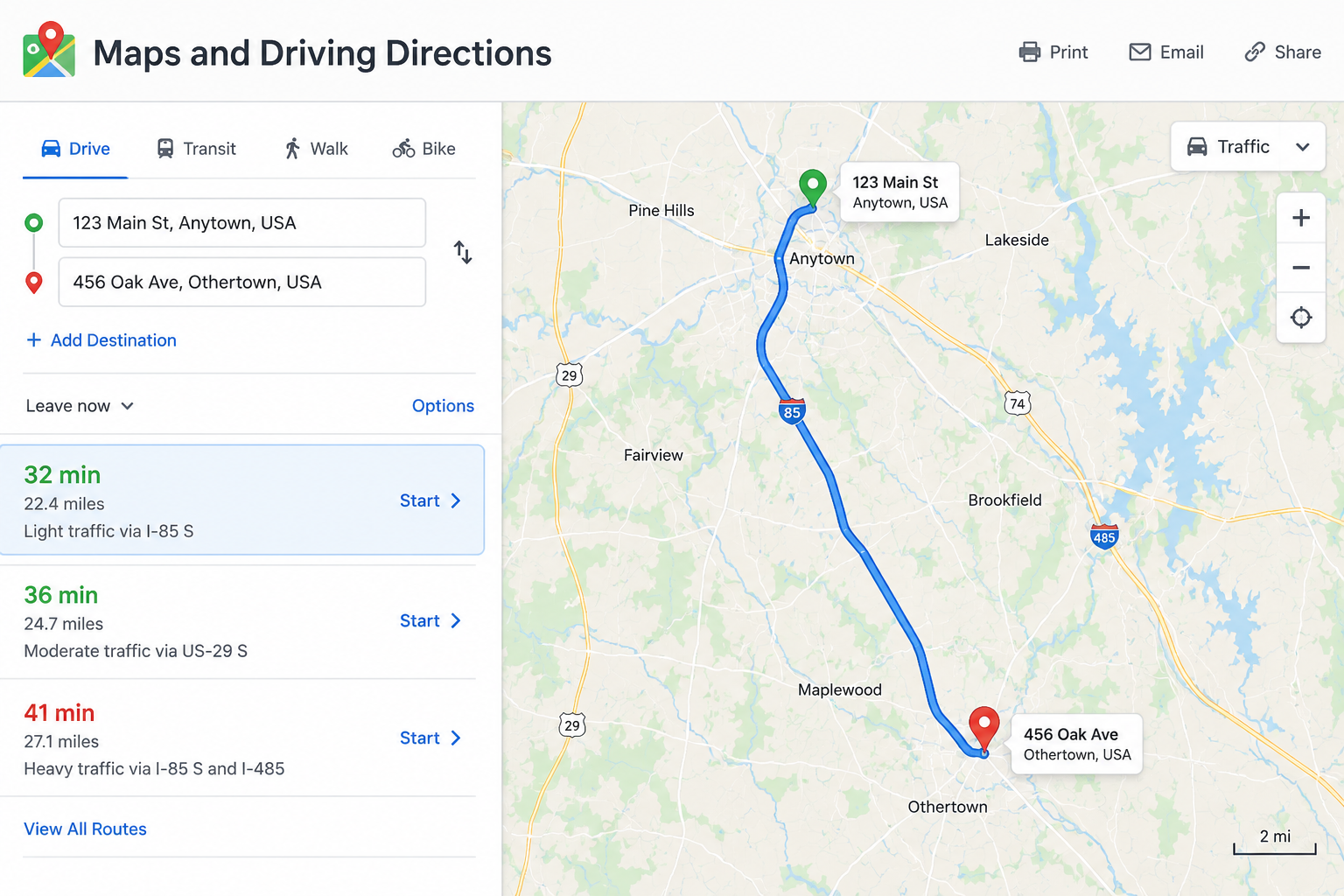
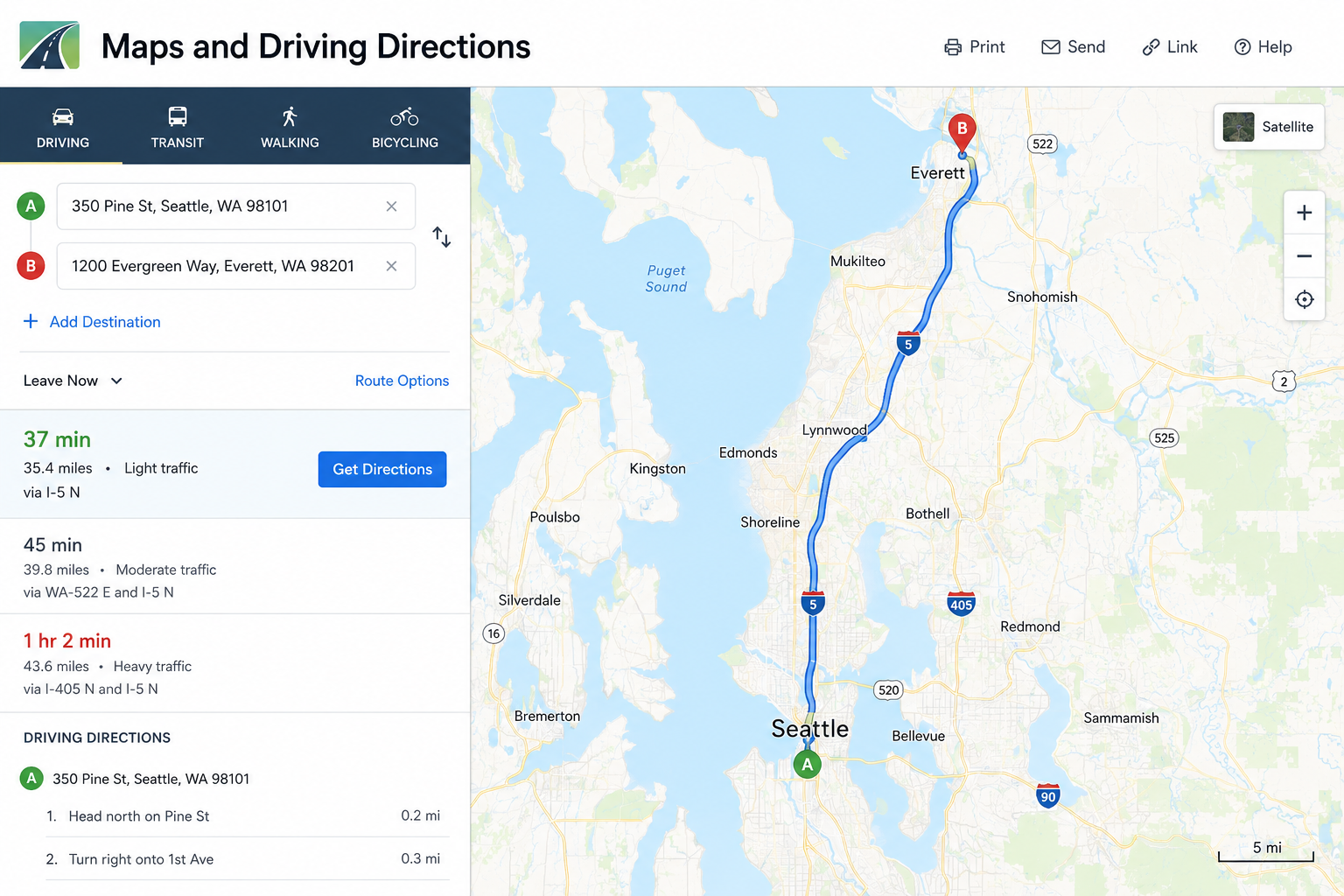
Driving directions turn a map into a step-by-step travel plan. Turn-by-turn directions explain where to start, which roads to take, when to merge, where to turn and how long each part of the trip should take. This is especially helpful in unfamiliar areas, busy cities, rural regions and places with complex intersections.
Reliable directions also help reduce last-minute decisions. By checking the route in advance, drivers can prepare for toll roads, construction zones, traffic delays, one-way streets, restricted turns and difficult parking situations.
The most useful driving directions explain both the full route and the small details that matter during the drive. Good directions identify the next turn, the distance to that turn, the correct lane, the exit number and the expected arrival time. They also help drivers understand when an alternate route is worth taking and when it is better to stay on the current road.
Step-by-Step Route Planning Guide
- Enter the exact destination. Use the full address, business name or landmark, and confirm that the map pin matches the place you want to visit.
- Review the full route before leaving. Look at the major roads, highways, exits and turns so the trip is familiar before navigation begins.
- Compare alternate routes. Check whether a route saves time, avoids tolls, uses fewer highways or offers easier driving conditions.
- Check live traffic and road alerts. Look for crashes, construction, closures, weather delays and congestion around busy intersections.
- Add planned stops. Long trips are easier when fuel, charging, food, rest areas and overnight stays are included in the route before departure.
Important Map Features to Check Before You Drive
- Estimated travel time: Review the expected arrival time and compare it with alternate routes.
- Live traffic: Check congestion, incidents and slowdowns before choosing a route.
- Route options: Compare fastest, shortest, toll-free and highway-based routes.
- Stops along the way: Add fuel, food, rest breaks or charging stops to long trips.
- Offline access: Save maps when traveling through areas with weak mobile service.
- Lane and exit guidance: Review complex junctions before reaching them, especially in cities and on unfamiliar highways.
- Parking and entrances: Check whether the destination has a main entrance, garage entrance, delivery entrance or street parking nearby.
How to Compare Route Options
A route planner may show several ways to reach the same destination. The fastest route is often the best choice for daily travel, but it is not always the most comfortable option. A route with fewer turns, wider roads or better lighting may be easier for a new driver, while a route that avoids highways may be better for local errands or short trips.
Before choosing, compare distance, travel time, tolls, road type, traffic and how difficult the route appears. If two routes have similar arrival times, the simpler route is often better because it reduces the chance of missed turns and sudden lane changes.
| Route Type | Best For | What to Check |
|---|---|---|
| Fastest route | Commutes, appointments and time-sensitive trips | Traffic, crashes, closures and lane changes |
| Shortest route | Local errands and lower-distance trips | Speed limits, turns, small roads and parking |
| Toll-free route | Budget-friendly travel | Extra travel time and alternate road quality |
| Highway route | Long-distance driving | Exits, rest areas, fuel stops and weather |
Tips for Safer and Easier Navigation
The best time to review a route is before the vehicle is moving. Look at the overall route, confirm the destination address and note major roads or exits. If you need to change the destination, stop safely before adjusting the map or directions.
For longer drives, keep a charger available, download offline maps when needed and review weather or road conditions in advance. A few minutes of planning can prevent missed exits, unnecessary detours and avoidable delays.
Navigation should support safe driving, not distract from it. Keep voice guidance at a comfortable volume, mount the phone or navigation screen where it can be glanced at quickly, and avoid typing while driving. If the route changes suddenly, continue driving safely until there is a good place to stop and review the new directions.
Planning Long Road Trips with Maps
Long-distance travel needs more preparation than a short local drive. A road trip plan should include the main route, backup routes, rest stops, fuel or EV charging stops, overnight locations and realistic driving breaks. Maps can help estimate how long each part of the trip will take and where delays are most likely to happen.
Before leaving, check road closures, weather alerts, mountain passes, ferry schedules, border crossings and toll systems when they apply. If several people are traveling together, share the route with them so everyone knows the destination, the planned stops and the expected arrival time.
Understanding Live Traffic and Road Conditions
Live traffic data can make driving directions more accurate because it reflects what is happening on the road now. A route that was fast in the morning may become slow during rush hour, after a crash or when construction blocks a lane. Traffic-aware directions help drivers decide whether to leave earlier, wait, or choose another road.
Traffic colors and alerts should be read as planning signals. Heavy traffic may not require a route change if the delay is short, but a complete closure or major crash may justify a longer detour. When possible, check traffic before departure and again during a safe stop on longer drives.
Using Maps for Local Search
Maps are also useful for finding nearby services. People often search maps for local businesses, hospitals, schools, public offices, hotels, fuel stations and restaurants. A map listing can show opening hours, phone numbers, reviews, photos and directions from your current location.
For local trips, check the destination details before leaving. Confirm the address, entrance location, parking instructions and whether the place is open. This helps you avoid arriving at the wrong entrance or taking an unnecessary extra loop around the block.
Local map searches are most helpful when you compare more than one signal. A business may appear close by distance, but another option may be easier to reach because it has better parking, clearer access or a faster route from your current location. Reviews, photos and opening hours can also help confirm that the place matches what you need before you drive there.

Common Map and Direction Mistakes to Avoid
Many navigation problems start with small errors. The destination may be entered with the wrong city, the map pin may point to the back of a building, or the selected route may include toll roads when the driver wanted to avoid them. Reviewing the route before departure catches many of these issues.
- Do not rely only on the first route: Compare options before you start, especially when traveling through busy or unfamiliar areas.
- Do not ignore arrival details: Check entrances, parking, delivery gates and walking distance from the parking area.
- Do not wait until signal is gone: Download offline maps before entering rural areas, mountains or places with weak mobile coverage.
- Do not overcorrect after a missed turn: Let the route recalculate and continue safely instead of making sudden moves.
Quick Checklist Before You Start Driving
- Confirm the destination address and map pin.
- Check estimated travel time and expected arrival time.
- Compare routes for traffic, tolls, highways and road closures.
- Add fuel, charging, food or rest stops for longer drives.
- Save offline maps if mobile service may be unreliable.
- Start navigation before moving and keep the device safely mounted.
Frequently Asked Questions About Maps and Directions
What is the best way to plan a driving route?
Enter the full destination address, compare available routes, check live traffic and review any tolls, construction or road closures before starting your trip.
Are shorter routes always better?
Not always. A shorter route may include slower local roads, more turns or heavier traffic. Compare travel time, road conditions and ease of driving before choosing.
Why should I save offline maps?
Offline maps are useful when mobile signal is weak, especially on rural roads, mountain routes, long highways and international trips.
How can live traffic improve driving directions?
Live traffic helps estimate current travel time, warn about crashes or construction and suggest alternate routes when the usual road is delayed.
What should I check before a long road trip?
Before a long road trip, review the full route, fuel or charging stops, weather, tolls, rest areas, road closures and offline map access.
Can maps help with local business searches?
Yes. Maps can help you find nearby businesses, compare opening hours, read reviews, check parking details and get directions from your current location.