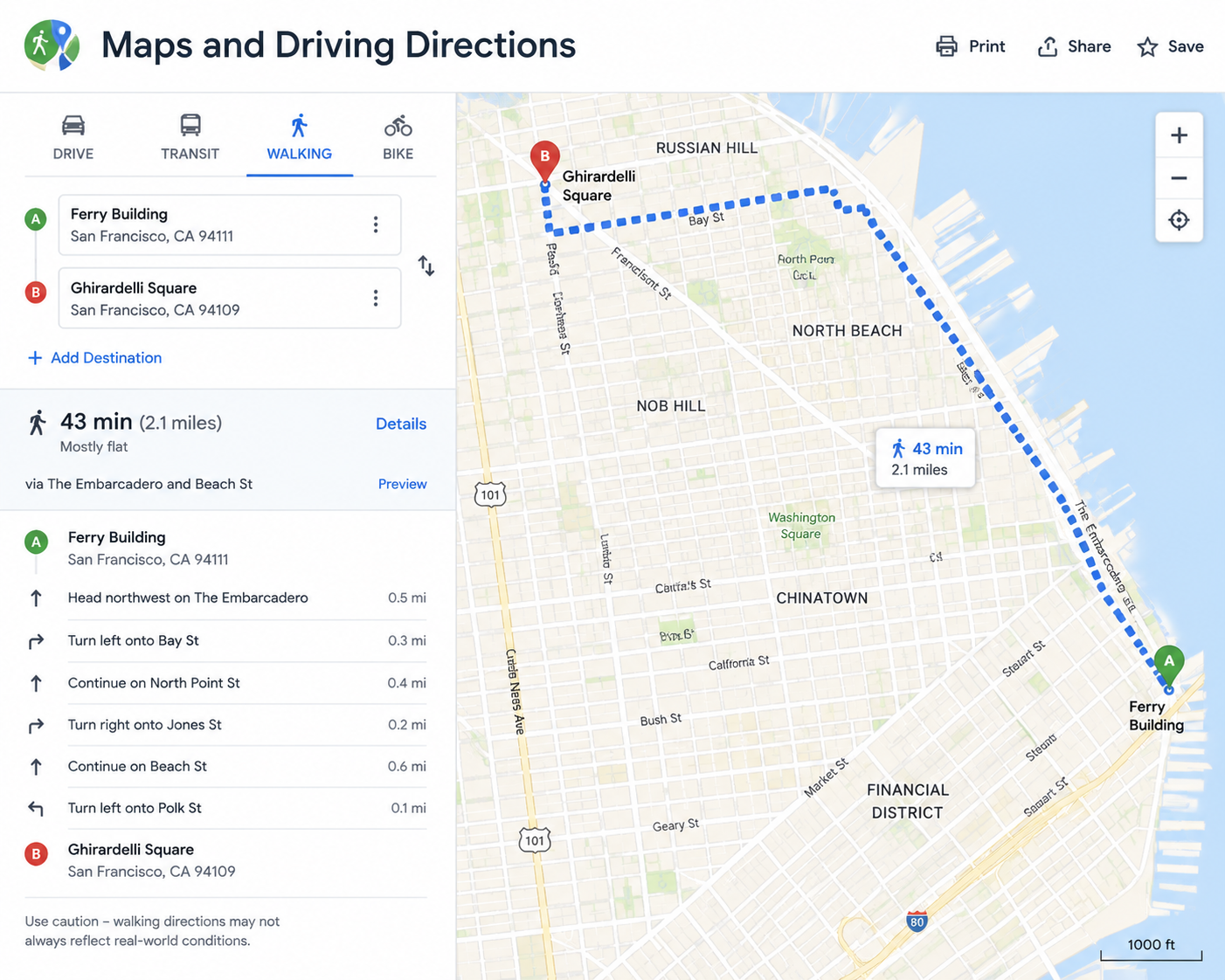
How Walking Directions Work
Walking directions use paths, sidewalks, pedestrian crossings, parks, trails and local streets to estimate how a person can walk from one location to another. They often use a different route than driving directions because pedestrians can use footpaths, plazas and shortcuts that cars cannot.
Walking time is usually estimated from distance and average walking speed. The estimate may change if the route has hills, stairs, crowded areas or complex crossings.
What to Check Before Walking
Before starting, review the route overview and identify major turns, crossings and landmarks. If the area is unfamiliar, look for well-lit streets, public places and clear pedestrian access.
Accessibility is important. A route with stairs, steep paths or unpaved sections may not work for wheelchairs, strollers, luggage or mobility needs. Check accessible route options when they are available.
- Check sidewalks, crossings and pedestrian paths.
- Look for major landmarks near turns.
- Avoid unsafe shortcuts through isolated areas.
- Review accessibility needs such as ramps or stairs.
- Save the destination in case signal becomes weak.
Walking Directions in Cities
City walking directions can be very useful because downtown areas often have one-way streets, transit stations, indoor passages and multiple building entrances. A walking route may guide you to a specific entrance, train platform or public square.
For busy areas, leave extra time for traffic lights, crowds and security checkpoints. The shortest route may not be the most comfortable route if it requires difficult crossings or confusing walkways.
Safety Tips for Pedestrian Navigation
Pay attention to your surroundings instead of looking at the screen constantly. Use audio guidance or glance at the next step before walking. At crossings, follow traffic signals and watch for turning vehicles.
If walking at night, prefer well-lit roads and populated areas. If a route feels unsafe, choose a busier street or change plans before continuing.
Frequently Asked Questions About Walking Directions
Are walking directions different from driving directions?
Yes. Walking directions can use sidewalks, paths, crossings and pedestrian shortcuts that are not available to vehicles.
How accurate are walking time estimates?
Walking time estimates are useful, but hills, crowds, crossings, weather and personal pace can change the actual time.
Can walking directions show accessible routes?
Some map services provide accessibility details, but it is still wise to check stairs, ramps, elevators and surface conditions.
What should I do if a walking route feels unsafe?
Choose a better-lit or busier route, enter a public place or use another travel option if needed.