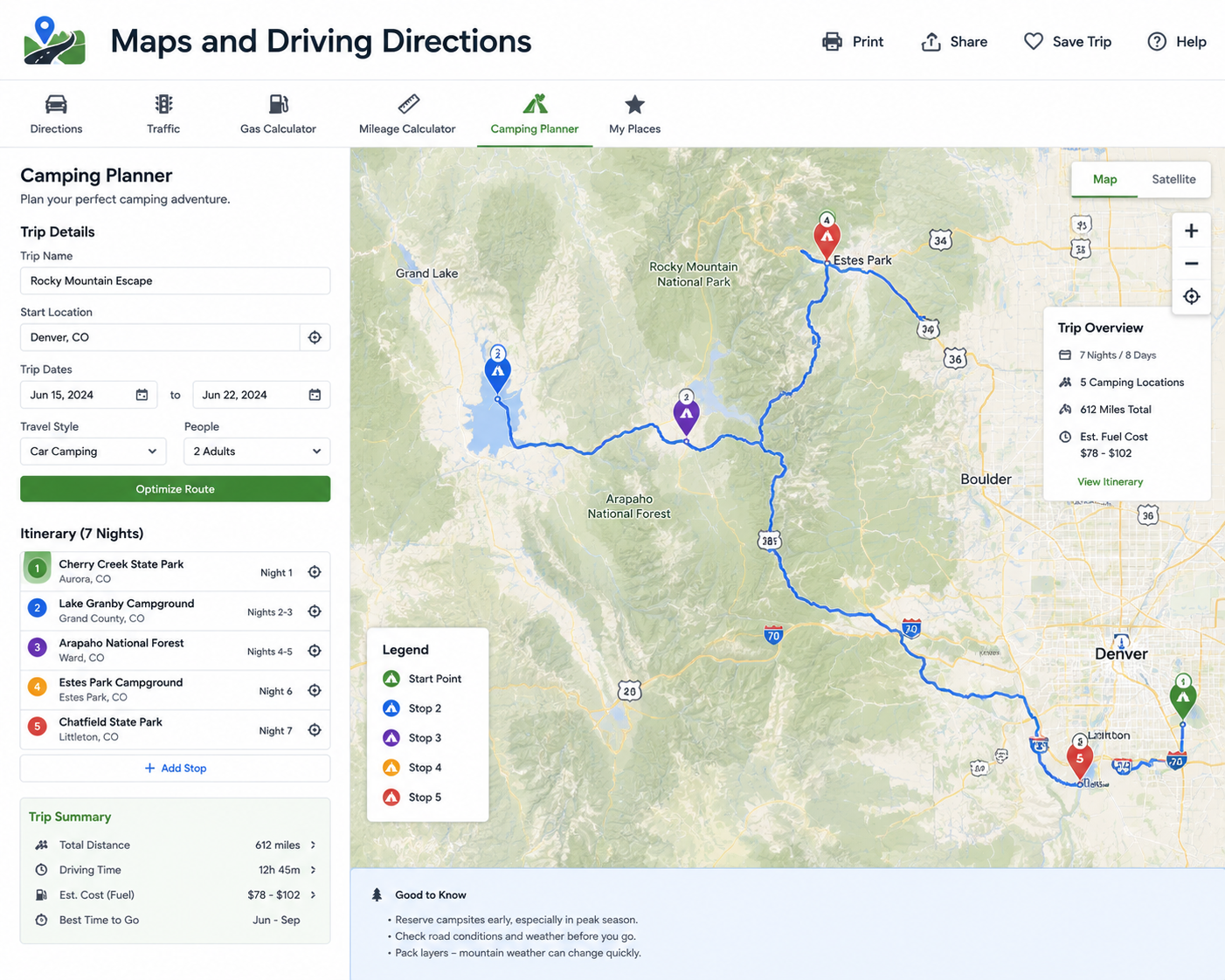
What a Camping Planner Should Cover
A camping plan should include where you will stay, how you will get there, what gear you need and how you will handle food, water, weather and emergencies. The more remote the campsite, the more important the planning becomes.
Maps are useful for checking access roads, parking areas, trailheads, campground loops, nearby towns and emergency services. If the area has weak signal, download offline maps before leaving.
Planning the Route to a Campsite
Campgrounds and dispersed campsites may have roads that are narrow, unpaved or seasonal. Review driving directions carefully and check whether the route is suitable for your vehicle. A route that looks short on a map may take longer on gravel roads or mountain roads.
Arrive with enough daylight to set up safely. If the campground has multiple entrances or loops, save the exact campsite or check-in location.
- Check road type and vehicle access.
- Confirm campsite address, entrance and check-in rules.
- Download offline maps for remote areas.
- Review weather and fire restrictions.
- Share your route and campsite details with someone you trust.
Camping Gear and Food Planning
A camping checklist should cover shelter, sleep system, cooking supplies, lighting, clothing, water, first aid, navigation and trash storage. The right list depends on weather, campsite facilities and trip length.
Food planning should match the campsite rules. Some areas require secure food storage because of wildlife. Bring enough water or a reliable water treatment method when potable water is not available.
Safety and Weather Preparation
Weather can change quickly outdoors. Check the forecast before leaving, but also prepare for colder nights, rain, wind or heat. Pack layers and keep important gear dry.
Know campground rules, fire restrictions and emergency procedures. If hiking from camp, carry navigation, water and lighting even for short walks.
Frequently Asked Questions About Camping Planner
What is a camping planner?
A camping planner helps organize campsite details, driving routes, gear, food, weather checks and outdoor safety preparation.
Why are offline maps important for camping?
Many campgrounds and outdoor areas have weak mobile service, so offline maps help with navigation when data is unavailable.
What should I check before driving to a campsite?
Check road type, vehicle access, campground entrance, check-in rules, weather, fire restrictions and travel time.
How early should I arrive at a campsite?
Arriving before dark is best because it gives you time to find the site, set up camp and handle unexpected issues safely.