What Maps Help You Do
A map shows the relationship between places. It can display roads, neighborhoods, landmarks, parks, businesses, transit stops, trails and boundaries. Digital maps go further by connecting that location information with directions, traffic, search results and route planning tools.
The value of a map is not only in seeing where something is. A good map helps answer practical questions: how far away is the destination, how long will it take to get there, which route is easiest, where can I park and what landmarks will help me recognize the place when I arrive.
Maps for Directions and Routes
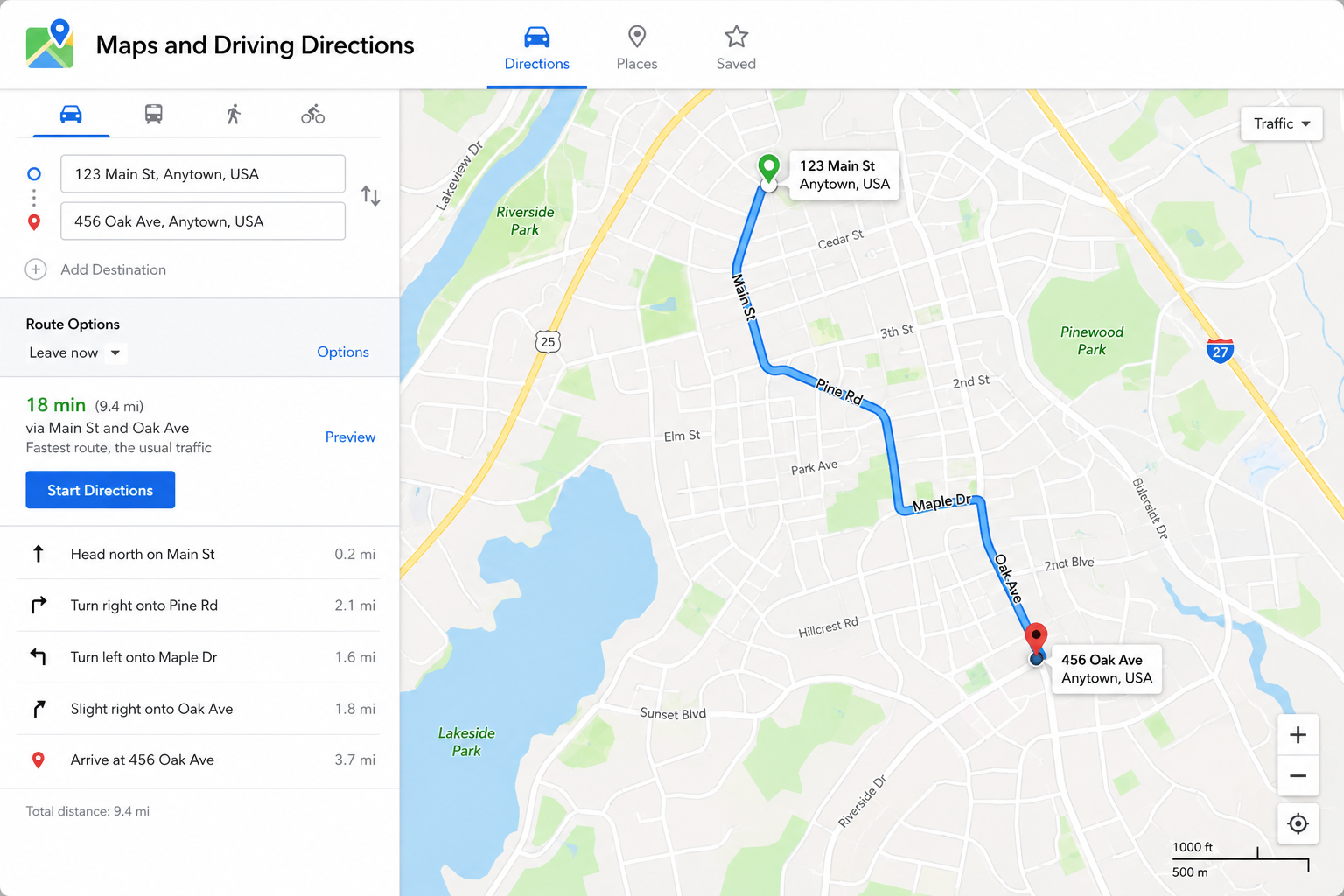
Maps are the foundation for driving directions, walking directions and route planning. A route line shows the path, while turn-by-turn directions explain each step. When live traffic is available, maps can also warn about congestion, crashes, construction and closures.
Before choosing a route, compare distance, time, road type, tolls and difficulty. The shortest route is not always the best route. A slightly longer route with clearer roads, fewer turns or easier parking may be the better choice.
- Use maps to compare driving, walking and travel routes.
- Check traffic and road alerts before departure.
- Review entrances, parking and nearby landmarks.
- Save offline maps for low-signal areas.
Maps for Local Search
Maps are also a local search tool. People use maps to find restaurants, gas stations, stores, hotels, hospitals, schools, public offices and attractions near a location. Map listings can show hours, reviews, photos, phone numbers, websites and directions.
For local visits, check more than distance. A business may be nearby but difficult to reach because of traffic, parking or entrance location. Photos, street view and reviews can help confirm that the destination is the right match.
Street View and Destination Preview
Street-level map views can help you preview a destination before arriving. They are useful for spotting building entrances, parking garages, storefronts, landmarks and complicated intersections. This makes unfamiliar places easier to recognize from the road or sidewalk.
Street imagery may not always be current, so important details should still be confirmed with live map data, official destination information or posted signs.
How to Use Maps More Effectively
The best way to use a map is to review the full area before focusing on the next turn. Look at the destination, route options, traffic conditions and arrival details. This creates a mental picture of the trip and reduces last-minute decisions.
For travel, combine maps with planning tools such as mileage calculators, gas calculators, route planners and trip checklists. This helps estimate time, distance, cost and stops before the journey begins.
Frequently Asked Questions About Maps
What are maps used for?
Maps are used to understand locations, find places, compare routes, get directions, check traffic and plan travel.
How do maps help with directions?
Maps show the route between places and can provide turn-by-turn directions, estimated travel time, road names and traffic alerts.
Can maps help find local businesses?
Yes. Maps can show nearby businesses, hours, reviews, photos, contact details and directions from your location.
Why should I check a map before leaving?
Checking a map before leaving helps confirm the destination, compare routes, review traffic and understand arrival details such as parking or entrances.